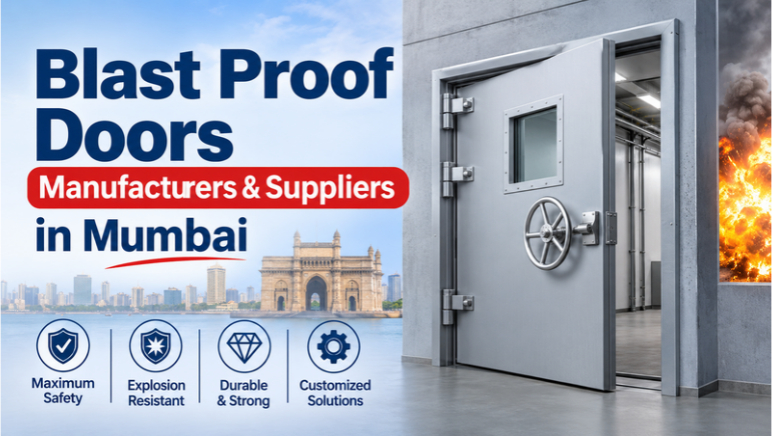
Safety and security are essential considerations in modern industrial, commercial, and infrastructure projects. Buildings located in high-risk environments require specialized protective systems to minimize damage and improve occupant safety during unexpected incidents. Blast-proof doors are an important part of such security infrastructure, offering protection against blast pressure and associated hazards when properly designed and installed.
With the growth of industrial facilities, petroleum installations, chemical plants, power stations, and critical infrastructure, the demand for specialized protective doors is increasing. Businesses searching for Blast Proof Doors Manufacturers & Suppliers in Mumbai need reliable products that meet project-specific engineering requirements and applicable safety standards.
Blast-proof doors are designed to withstand specified blast loads and help protect critical spaces from pressure waves and related structural hazards. Selecting the right manufacturer and supplier is important for ensuring product quality, performance, and installation reliability.
In this blog, we will explore blast-proof doors, their features, applications, benefits, and important factors to consider when choosing a manufacturer or supplier in Mumbai.
What Are Blast Proof Doors?
Blast-proof doors are specially engineered security doors designed to resist the effects of blast pressure generated by explosions.
Unlike conventional doors, these doors are manufactured using reinforced materials, heavy-duty frames, specialized locking arrangements, and engineered structural components.
Their design depends on factors such as blast pressure, impulse, building configuration, installation conditions, and the level of protection required.
Blast-resistant doors are commonly used in facilities where protection against explosion-related hazards is an important safety requirement.
These doors may be designed to:
Resist specified blast pressure loads.
Maintain structural integrity under defined loading conditions.
Reduce the risk of door failure during a blast event.
Protect critical equipment and infrastructure.
Support the safety of occupants in designated protected areas.
It is important to understand that no blast-proof door provides universal protection against every explosion. Performance depends on engineering design, testing, installation, and project-specific requirements.
Why Are Blast Proof Doors Important?
Industrial and infrastructure facilities may operate in environments where explosion-related risks need to be carefully managed.
Installing appropriately engineered blast-resistant doors can improve the protective design of buildings and critical spaces.
1. Protection Against Blast Pressure
Blast-resistant doors are designed to withstand specified pressure loads generated by explosions. Their performance depends on the selected design criteria and testing requirements.
2. Improved Building Safety
These doors can help protect designated areas within industrial and commercial facilities by maintaining the integrity of critical openings during blast events.
3. Protection of Critical Infrastructure
Power plants, refineries, chemical facilities, and other industrial installations may require specialized protective doors to safeguard important operational areas.
4. Enhanced Security
Blast-resistant doors can form part of a broader facility security system when combined with suitable structural protection and access-control measures.
5. Protection of Sensitive Equipment
Certain facilities contain expensive machinery, control systems, and essential equipment that require protection from external hazards.
Key Features of Blast Proof Doors
When evaluating blast-proof doors, it is important to understand their engineering and construction features.
1. Heavy-Duty Steel Construction
Blast-resistant doors commonly use engineered steel sections and reinforced structural components to achieve the required strength and rigidity.
2. Reinforced Door Frames
Door frames are critical to overall performance. They must be designed to transfer the specified loads safely into the surrounding structural system.
3. Specialized Locking Systems
Heavy-duty locking mechanisms and hardware help maintain door closure under the design loading conditions.
4. Engineered Hinges
Specialized hinges are selected according to door dimensions, weight, loading conditions, and operational requirements.
5. Controlled Deflection
Blast-resistant doors are engineered to manage deformation under specified blast loads while maintaining the required level of protection.
6. Quality-Controlled Manufacturing
Material selection, fabrication, welding, dimensional accuracy, and inspection are important aspects of manufacturing reliable blast-resistant doors.
7. Project-Specific Design
Different buildings have different protection requirements. Blast-resistant doors should be designed according to the project's engineering specifications rather than using a standard design for every application.
Applications of Blast Proof Doors in Mumbai
Mumbai is an important industrial, commercial, financial, and infrastructure centre. The city and surrounding industrial regions include facilities where specialized protective systems may be required.
Blast-proof doors are used in several sectors.
1. Oil and Gas Industry
Refineries, petroleum storage facilities, gas processing units, and related installations may require blast-resistant doors for designated control rooms and operational spaces.
2. Chemical and Petrochemical Plants
Chemical manufacturing facilities may have explosion-related hazards depending on the materials and processes involved. Appropriate protective doors can form part of an overall risk-management strategy.
3. Power Plants
Power generation facilities contain critical equipment and control rooms that may require specialized protective construction.
4. Industrial Manufacturing Facilities
Certain manufacturing environments involve combustible materials, pressurized systems, or industrial processes that require additional safety measures.
5. Defence and Strategic Infrastructure
Selected defence-related and strategic installations may require engineered blast-resistant access systems to protect sensitive operational areas.
6. Critical Infrastructure Buildings
Control centres, emergency facilities, and other critical infrastructure locations may use blast-resistant doors as part of their protective building design.
Types of Blast Resistant Doors
Blast-resistant doors can be designed in different configurations depending on the application, available space, and required performance.
1. Single-Leaf Blast Proof Doors
Single-leaf doors consist of one reinforced door panel and are suitable for applications where the opening size and access requirements permit a single-door arrangement.
2. Double-Leaf Blast Proof Doors
Double-leaf doors contain two door panels and are generally used for wider openings or locations requiring larger equipment access.
3. Steel Blast Resistant Doors
Steel blast-resistant doors use engineered steel construction and reinforcement to achieve specified structural performance.
4. Custom-Designed Blast Proof Doors
Custom doors are developed according to project-specific dimensions, pressure requirements, installation conditions, and architectural considerations.
The appropriate door configuration should always be selected through engineering assessment.
How to Choose the Best Blast Proof Doors Manufacturer in Mumbai?
Selecting a reliable manufacturer is important for projects involving specialized security and protective infrastructure.
Here are some factors to consider before choosing a blast-proof door manufacturer or supplier.
1. Manufacturing Experience
Evaluate the manufacturer's experience in fabricating industrial security doors and specialized protective door systems.
2. Engineering Capabilities
Check whether the manufacturer can provide project-specific engineering support, design documentation, and technical specifications.
3. Material Quality
The quality of steel, reinforcement components, hinges, locking systems, and other hardware directly influences the finished product.
4. Testing and Certification
Ask for relevant blast testing reports, performance documentation, and certifications applicable to the proposed door design.
Verify that the testing conditions and results match your project's specified blast requirements.
5. Customisation Options
A professional manufacturer should be able to understand different opening dimensions, frame requirements, hardware arrangements, and operational needs.
6. Installation Support
Correct installation is essential for achieving the intended performance. Evaluate whether the supplier provides installation guidance or qualified installation services.
7. After-Sales Support
Technical assistance, inspection support, maintenance guidance, and replacement hardware availability are useful considerations for long-term operation.
Benefits of Choosing Professional Blast Proof Doors Suppliers
Working with an experienced supplier can offer several advantages.
Project-Specific Solutions: Professional suppliers can help identify door configurations according to project requirements.
Quality Materials: Suitable materials and hardware contribute to the structural performance and operational reliability of the door.
Technical Assistance: Experienced suppliers can provide relevant technical information and product specifications.
Custom Manufacturing: Specialised door dimensions and configurations can be developed for different industrial applications.
Installation Coordination: Proper coordination between the manufacturer, supplier, contractor, and structural team helps ensure correct installation.
Long-Term Reliability: Quality manufacturing, appropriate installation, and regular inspection support the long-term performance of protective door systems.
Why Mumbai Businesses Need Specialized Blast Resistant Door Solutions
Mumbai is home to major industrial establishments, commercial infrastructure, petroleum-related facilities, and critical business operations.
Industrial regions in and around Mumbai, including Navi Mumbai, Thane, Taloja, TTC Industrial Area, and the wider Mumbai Metropolitan Region, support different manufacturing and infrastructure activities.
Facilities operating in high-risk environments need to evaluate potential explosion hazards and implement appropriate protective measures.
Blast-resistant doors can contribute to these safety requirements when selected through proper risk assessment and engineering design.
For project developers, industrial contractors, architects, and facility managers, choosing experienced blast-proof door manufacturers and suppliers is an important part of planning specialized building protection systems.
Importance of Proper Installation and Maintenance
Even a well-designed blast-resistant door may not perform as intended if it is installed incorrectly.
Proper installation and maintenance are essential for maintaining the door's intended performance.
Important considerations include:
Correct alignment of the door and frame.
Proper anchoring to the surrounding structure.
Inspection of hinges and locking hardware.
Checking door movement and closing mechanisms.
Periodic inspection of welds and structural components.
Maintenance according to manufacturer recommendations.
Verification of the surrounding wall and supporting structure.
The entire door assembly, including the frame, anchorage, hardware, and supporting structure, should be considered during engineering evaluation.
Conclusion
Blast-proof doors are an important protective solution for industrial facilities, critical infrastructure, and buildings operating in environments where explosion-related hazards must be considered.
Choosing reliable Blast Proof Doors Manufacturers & Suppliers in Mumbai requires careful evaluation of engineering capabilities, material quality, testing documentation, manufacturing standards, and installation support.
Whether you need single-leaf doors, double-leaf doors, or custom-engineered blast-resistant door systems, selecting the right manufacturer can help ensure that the proposed solution meets your project's safety and performance requirements.
Before finalizing your purchase, consult qualified engineering professionals, verify relevant testing documentation, and ensure that the complete door assembly is suitable for the intended application.
Invest in properly engineered blast-resistant door solutions to strengthen your facility's protective infrastructure.