


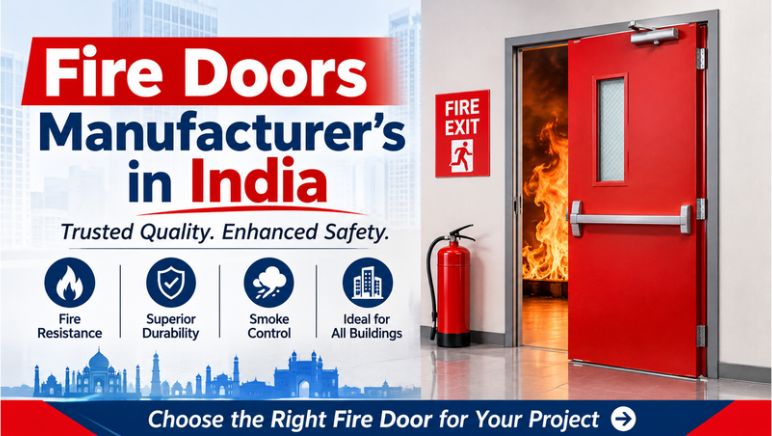
Fire Door Manufacturers in India: A Complete Guide to Fire Safety Doors
Admin | 13 November, 2026
Fire safety is an essential consideration in modern residential, commercial, and industrial buildings. Offices, hospitals, hotels, shopping malls, factories, educational institutions, and residential complexes require reliable fire protection systems to safeguard people and property. Among the important components of passive fire protection, fire doors play a significant role in controlling the spread of fire and smoke.
Choosing the right fire door manufacturer in India is important for ensuring product quality, durability, proper installation, and compliance with applicable fire safety requirements. A well-designed fire door can help contain fire within a designated area, provide additional time for occupants to evacuate, and support the work of emergency response teams.
This blog explains fire doors, their types, applications, benefits, and the factors to consider when selecting a reliable fire door manufacturer in India.
Why Are Fire Doors Important?
Fire incidents can spread rapidly through buildings, particularly when openings and passageways are not adequately protected. Fire doors help create compartments that restrict fire and smoke movement.
Here are some important reasons why fire doors are required in buildings.
1. Helps Control the Spread of Fire
Fire doors are designed to resist fire for a specified period, helping limit its movement between rooms, corridors, staircases, and other building sections.
2. Provides Additional Evacuation Time
By helping contain fire and smoke, properly installed fire doors can support safer evacuation procedures and give occupants additional time to reach designated exits.
3. Helps Protect Property and Equipment
Fire compartmentation can reduce the spread of fire-related damage to other parts of a building, including machinery, electrical installations, documents, and valuable equipment.
4. Supports Building Fire Safety Planning
Fire doors are an important part of a building's passive fire protection system and work alongside alarms, sprinklers, extinguishers, emergency lighting, and evacuation routes.
5. Helps Meet Applicable Safety Requirements
Depending on the building type and local regulations, fire-rated doors may be required in designated locations. Selecting suitable tested products can support compliance with applicable fire safety requirements.
Types of Fire Doors Available in India
Fire door manufacturers in India offer different designs and configurations to meet the requirements of residential, commercial, and industrial buildings.
1. Steel Fire Doors
Steel fire doors are widely used in commercial buildings, factories, warehouses, hospitals, and industrial facilities. They typically feature steel door sheets with an appropriate fire-resistant core.
Key features:
Strong and durable construction.
Suitable for many commercial and industrial applications.
Available in different sizes and finishes.
Can be supplied with compatible fire-rated hardware.
2. Wooden Fire Doors
Wooden fire doors are designed for applications where appearance and interior aesthetics are important. They use specially engineered fire-resistant construction and suitable components.
Key features:
Suitable for selected residential and commercial interiors.
Available in different decorative finishes.
Can be designed to complement interior spaces.
Must be tested and certified as a complete door assembly.
3. Single-Leaf Fire Doors
Single-leaf fire doors consist of one door shutter and are commonly installed in corridors, service rooms, staircases, and smaller openings.
They are suitable for locations where a standard single-door configuration meets the building's access and fire safety requirements.
4. Double-Leaf Fire Doors
Double-leaf fire doors consist of two door shutters and are used for wider openings in commercial and industrial buildings.
They can be suitable for areas requiring wider access, including equipment rooms, warehouses, and selected service entrances. The complete assembly must be appropriately tested and installed.
5. Fire-Rated Glass Doors
Fire-rated glass doors combine visibility with fire resistance. They may be used in selected commercial interiors, offices, and public buildings where visual openness is important.
The glass, framing system, seals, and hardware must form part of an approved or tested assembly suitable for the intended application.
Important Features of Quality Fire Doors
When selecting fire doors, buyers should evaluate more than appearance and price. The quality of materials, construction, hardware, testing, and installation all influence the performance of the complete assembly.
Important features include:
Fire-Resistant Core: The core material should be suitable for the required fire-resistance rating.
Strong Door Frame: The frame must be compatible with the tested door assembly.
Intumescent Seals: These seals expand when exposed to heat and help close gaps around the door.
Smoke Seals: Where specified, smoke seals help restrict smoke movement.
Fire-Rated Hinges: Suitable hinges support the door's weight and intended operation.
Self-Closing Mechanism: A compatible closer helps ensure that the door returns to its closed position.
Fire-Rated Locking Hardware: Locks, latches, and other hardware must be appropriate for the door's tested configuration.
Proper Installation: Correct fitting, alignment, clearances, and maintenance are essential for reliable performance.
Applications of Fire Doors
Fire doors are used across a wide range of building types and industries.
Commercial Buildings
Offices, IT parks, shopping malls, hotels, and business centres use fire doors to protect corridors, staircases, electrical rooms, and other designated areas.
Hospitals and Healthcare Facilities
Hospitals require effective fire compartmentation to support the safety of patients, visitors, and healthcare staff. Fire doors may be installed in corridors, utility rooms, staircases, and service areas.
Industrial Facilities
Manufacturing plants, factories, warehouses, and processing units use fire doors to help separate production areas, storage sections, and utility spaces.
Residential Buildings
Apartment complexes and high-rise buildings may require fire-rated doors in staircases, service rooms, electrical rooms, and other designated locations.
Educational Institutions
Schools, colleges, universities, and training centres may use fire doors as part of their building fire protection arrangements.
Fire Door Standards and Compliance in India
Fire doors used in India should be selected according to the applicable building regulations, fire safety requirements, and relevant testing standards.
The National Building Code of India (NBC), particularly its fire and life safety provisions, provides guidance for building fire protection and compartmentation. Relevant Indian Standards and recognised fire-resistance testing methods may also apply depending on the product and project.
Before purchasing, confirm:
The fire-resistance rating required for the building.
Applicable local fire authority requirements.
Relevant product testing and certification.
Compatibility of the door, frame, seals, and hardware.
Installation and inspection requirements.
Project requirements may differ depending on occupancy, building height, design, and local authority conditions. Always consult a qualified fire safety professional and the relevant approving authority.
Conclusion
Fire doors are an important part of passive fire protection in residential, commercial, and industrial buildings. They help restrict the movement of fire and, where appropriately designed, smoke, supporting building compartmentation and safer evacuation.
When searching for fire door manufacturers in India, consider product quality, tested fire-resistance ratings, certification, materials, hardware, installation support, and after-sales service. Selecting the right fire door assembly for the building's requirements can contribute significantly to an effective fire safety strategy.
Investing in properly tested, installed, and maintained fire doors is an important step towards creating safer buildings and protecting people, property, and infrastructure.
